
 English
 Español
 Portugues
 Pусский
 Français
 Deutsch
 日本語
日本語 한국어
한국어 العربية
 Italiano
 Svenska
 Polski
 ไทย
ไทย Türk dili
 Indonesia
 Tiếng Việt
 čeština
 Română
 Suomalainen

When a knitting machine is running at high speed, every small mechanical movement matters. Needles have to rise, fall, hold, and return at the right time. The yarn must stay under control, and the whole movement has to repeat again and again. A small Cam inside the machine may not look very complicated, but its profile has a direct effect on how the machine works.
At Dongguan Jifan Precision Machinery Co., Ltd., we manufacture custom cams and precision mechanical components for automated equipment. As a High Precision Knitting Machine Cam Manufacturer, we focus on custom knitting machine cams, Cam Mechanisms, Profile Grinding, irregular cam grinding, eccentric shafts, crankshafts, plate cams, conjugate cams, and other precision parts.
I know that textile machinery customers are not simply buying a piece of machined metal. They are buying a component that needs to work inside an existing machine. The dimensions need to fit. The cam profile needs to match the required movement. The surface needs to be suitable for repeated contact. Most importantly, the finished part needs to perform consistently during actual machine operation.
That is why we manufacture our knitting machine cams according to customer drawings, specifications, samples, and equipment requirements. We do not rely on one fixed size or one standard configuration. Different knitting machines have different structures, gauges, cam tracks, needle arrangements, operating speeds, and fabric requirements, so the cam should be developed around the actual application.
1. What Is a Knitting Machine Cam?
A knitting machine cam is a mechanical component used to control the movement of needles, sinkers, or other moving elements in a knitting system. In simple terms, the cam provides a shaped path that guides a moving part through a planned motion.
In flat knitting machines, for example, the carriage contains cam locks that control the needles. The cam system includes fixed and movable cam elements, and the needle butt slides through the cam channel as the carriage moves. The shape of the cam channel determines how the needle moves upward and downward.
In circular knitting machines, the principle is similar, although the mechanical arrangement is different. Cylinder cam systems guide needle movement around the knitting cylinder. Technical information published by Terrot describes enclosed needle tracks and positive needle guidance as important parts of high-speed circular knitting machine operation.
This is why I treat a knitting machine cam as a functional precision component rather than a normal metal part. A small change in its working profile can change the movement of the needle. A change in the mounting dimension can affect alignment. A poor surface condition can increase wear at the contact area.
When customers ask us for a custom knitting machine cam, I first want to understand where the component will be installed and what movement it needs to produce. This information helps us select a suitable machining method and inspection approach.
Basic Functions of a Knitting Machine Cam
Guide needle movement through a defined path.
Control the lifting and lowering movement of needles.
Support repeatable knitting cycles.
Help control stitch formation according to the machine design.
Work together with needles, sinkers, cam tracks, and other machine components.
Support stable operation during repeated machine cycles.
For example, a flat knitting machine can use different cam positions to create knit, tuck, or miss movements. Textile School explains that the cam system can include raising cams and lowering or knock-over cams, with different needle strokes used for different knitting actions.
| Knitting Cam Function | Simple Explanation | Why It Matters |
|---|---|---|
| Needle lifting | Guides the needle upward | Helps the needle reach the required working position |
| Needle lowering | Guides the needle downward | Supports stitch formation and return movement |
| Tuck movement | Places the needle in a tuck position | Allows a new yarn to be received while retaining the existing loop |
| Miss movement | Keeps the needle out of the normal knitting action | Supports selected knitting structures |
| Stitch movement | Controls the needle stroke | Influences the resulting fabric structure |
Source: The functional descriptions are based on Textile School's technical explanation of flat knitting machine cam-lock systems and needle movement.
2. How Does a Knitting Machine Cam Work?
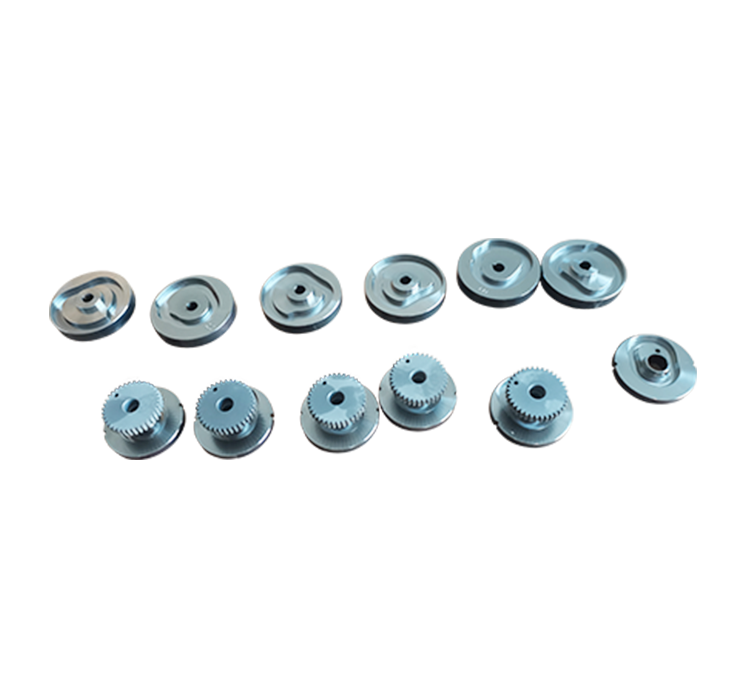
The working principle is actually quite easy to understand once we stop looking at the cam as an isolated metal component.
Imagine a small metal follower moving through a shaped track. If the track rises, the follower rises. If the track falls, the follower falls. If the track remains at a certain level, the follower can remain in that position. A knitting machine cam works on a similar idea, although the actual geometry is much more carefully designed.
In a flat knitting machine, the carriage travels across the needle bed. The needle butts enter the cam channels, and the cam profiles guide them through their required movement. Textile School notes that the cam profiles are curved and chamfered to help the needle move smoothly through the channel.
In circular knitting equipment, the cam system is arranged around the knitting cylinder. As the cylinder or knitting elements move relative to the cam tracks, the needles follow the programmed mechanical path.
This means the cam profile is directly connected to the machine's knitting action.
If the machine needs a needle to rise higher, the cam geometry must allow that movement. If the needle needs to stay at a particular position for part of the cycle, the cam path needs to provide the required motion. If the movement is too sudden, contact forces and vibration can become a concern.
This is one reason why precision matters so much in knitting machine cam manufacturing.
Cam and Needle Movement
The needle butt is one of the key contact points in many knitting machine cam systems. As the needle moves through the cam track, the butt contacts the cam surface and follows its shape.
A public Textile School wear calculator for circular knitting equipment even models the sliding distance between needle butts and cam tracks, using factors such as cylinder diameter, machine speed, number of needles, cam profile length, contact area, and reaction force.
That gives a useful practical lesson: the cam is part of a moving contact system. Its design and surface condition should therefore be considered together with the needle, machine speed, lubrication, load, and operating cycle.
Why Cam Profile Design Matters
When I work with a customer on a custom cam, I pay close attention to the profile. The profile determines movement, so it cannot be treated like an ordinary decorative surface.
A well-designed profile can help create controlled movement. A poorly matched profile may cause excessive contact, unwanted vibration, uneven movement, or accelerated wear.
For high-speed textile machinery, these small differences can become important because the same mechanical action is repeated many times during production.
3. Key Features of Our Precision Knitting Machine Cams
Our precision knitting machine cams are made for customers who need customized mechanical components rather than generic replacement parts. The exact specification depends on the customer's equipment, but several features are common across our projects.
Custom Cam Profiles
We manufacture cam profiles according to customer drawings, CAD models, samples, or technical specifications. This allows us to support different knitting machine structures and mechanical requirements.
Controlled Dimensions
Cam dimensions are not only about the overall size. Mounting holes, center distances, shaft features, reference surfaces, thickness, groove dimensions, and profile positions may all affect installation.
We therefore check the dimensions according to the agreed drawings and specifications before delivery.
Profile Grinding
For applications requiring additional profile control or surface finishing, we provide profile grinding and irregular cam grinding services. The actual finishing method depends on the material, geometry, tolerance, and customer requirements.
Custom Materials
Different machines work under different loads and speeds. Material selection should therefore be based on the actual working environment rather than simply choosing a material because it is commonly used for cams.
Repeatable Production
When a customer has approved a cam design and needs repeat orders, we can manufacture according to the confirmed specification. This is useful for machine manufacturers, maintenance teams, and production equipment users who need replacement components over time.
Application-Based Manufacturing
I always prefer to understand the machine application. If we know how the cam will work, we can better understand which dimensions and surfaces deserve special attention.
| Cam Requirement | Our Manufacturing Focus | Customer Benefit |
|---|---|---|
| Custom profile | Profile machining and finishing | Matches the specified movement |
| Dimensional accuracy | Machining and dimensional inspection | Supports proper machine assembly |
| Working surface | Machining and profile grinding where required | Supports consistent contact conditions |
| Replacement part | Drawing or sample-based production | Useful for maintenance and machine repair |
| Production batch | Controlled repeat manufacturing | Supports consistent replacement parts |
Source note: Manufacturing capabilities and service descriptions in this table are based on our stated product and service scope. They are not third-party performance ratings.
4. Technical Advantages of Custom Knitting Machine Cam Manufacturing
There is a simple reason to choose a custom cam instead of modifying a standard one: the machine already has its own mechanical language.
The needle type, gauge, cam track, cylinder diameter, stitch structure, speed, and other components work together. A cam designed for one machine may not fit another machine even if the two machines appear similar.
Public technical information from knitting machinery manufacturers shows how much these systems can vary. For example, one published circular knitting machine specification lists different cylinder diameters, gauges, feeder counts, and needle-track configurations.
Another machine specification lists cylinder diameters from 26 to 38 inches, gauges from E14 to E32, and different needle-track configurations.
These differences explain why a custom approach can be useful.
| Published Knitting Machine Example | Diameter | Gauge | Cam / Track Information |
|---|---|---|---|
| High-speed double-knit example | 15–30 in | Rib 10–18 npi; Interlock 18–28 npi | 1 or 2 cam tracks depending on configuration |
| D4-2.2 example | 26–38 in | E14–E32 | Up to 4 needle tracks in cylinder and 2 in dial options |
| Terrot I3P154 example | 34 in | E28 | 1 cylinder + 1 dial needle track |
Sources: Published machine information from Knitting Industry documents and Terrot technical material. These figures describe the referenced machine examples and are provided for comparison only; they are not specifications of our knitting machine cams.
When I see these differences, I do not think “one cam fits all.” I think the opposite. The cam should be matched to the actual machine configuration.
Better Fit for Existing Equipment
Custom machining allows the cam to follow the dimensions of the existing equipment instead of requiring the equipment to be changed around the cam.
Better Control of Motion
The cam profile can be developed around the required needle or machine movement. This is especially useful when a standard replacement part does not produce the required result.
More Flexible Replacement Options
Older textile machinery can sometimes have components that are difficult to source. If the original drawing or a usable sample is available, custom machining can provide another route for replacement production.
Support for Special Machine Configurations
Some machines have special cam tracks, modified stitch settings, or customer-specific mechanical arrangements. Custom Cam Machining gives the machine builder more freedom to specify the component.
5. Our Knitting Machine Cam Manufacturing Process
When we receive an inquiry, I do not immediately send the drawing to production. First, I want to make sure that we understand what the customer actually needs.
Step 1: Drawing or Sample Review
We review the customer's 2D drawing, 3D CAD model, sample, photographs, or equipment information. If there are several versions of the cam, we confirm the exact version before production.
This step is important because a small difference in a cam profile or mounting dimension can make a large difference once the part is installed.
Step 2: Technical Requirement Confirmation
We confirm material, quantity, dimensional requirements, profile information, surface requirements, and any special inspection points.
If the cam is being used as a replacement part, information about the machine model and application can also be useful.
Step 3: Manufacturing Planning
We determine an appropriate machining route based on the part geometry. Depending on the design, machining may include CNC turning, CNC milling, drilling, boring, profile machining, grinding, and other operations.
The goal is not to use the most complicated process. The goal is to use a practical process that can produce the required geometry and quality.
Step 4: Rough Machining
During rough machining, excess material is removed and the basic shape is established. The exact operation depends on the component structure.
Step 5: Precision Profile Machining
The working cam profile is then produced according to the approved design. This is one of the most important stages because the profile directly influences the movement of the knitting machine component.
Step 6: Profile Grinding
Where required, we use profile grinding or irregular cam grinding to refine the working surface. Grinding can provide a controlled finishing process for critical cam profiles.
Step 7: Dimensional Inspection
Finished parts are checked according to the agreed specifications. Depending on the drawing, inspection can cover overall dimensions, mounting dimensions, holes, profile-related features, and other critical areas.
Step 8: Final Verification
Before delivery, the product goes through final quality checking and verification against the confirmed requirements.
Step 9: Protective Packaging
Precision components need protection during transportation. We use suitable protective packaging to reduce the risk of scratches, impact, contamination, and handling damage. Customized packaging can also be discussed when the customer has special requirements.
| Production Stage | Main Activity | Purpose |
|---|---|---|
| Requirement review | Check drawings, samples, and specifications | Confirm the actual product requirement |
| Process planning | Select machining and finishing methods | Create a practical manufacturing route |
| Machining | CNC machining and profile creation | Produce the basic and functional geometry |
| Grinding | Profile or irregular cam grinding | Refine specified working surfaces |
| Inspection | Dimensional and quality checks | Verify the finished component |
| Packaging | Protective packing | Reduce transportation damage |
Source note: The process sequence above describes our manufacturing workflow and service scope. The exact process can change according to product geometry, material, quantity, and customer specifications.
6. Where Are Knitting Machine Cams Used?
Knitting machine cams are used in textile machinery where mechanical movement needs to be controlled and repeated. Their specific role depends on the type of knitting equipment.
Circular Knitting Machines
Circular knitting machines use cylinder and cam systems to guide knitting elements. Published technical documents show different cylinder diameters, gauges, feeder configurations, and cam-track arrangements across machine types.
In these machines, cam geometry needs to work together with the needles and other knitting elements. For high-speed equipment, smooth movement and stable contact become particularly important.
Flat Knitting Machines
Flat knitting machines use a carriage with cam locks to control needle movement. The cam system can determine whether needles perform knit, tuck, or miss movements.
This makes the cam an important part of the mechanical system rather than simply a supporting component.
Special Textile Machinery
Custom cams can also be considered for specialized textile equipment where a standard component does not match the required movement or installation dimensions.
Replacement and Maintenance
For machine maintenance teams, a custom replacement cam can be useful when the original part is no longer readily available or when an existing component needs to be reproduced from technical information.
Machine Development
For equipment manufacturers, custom cam machining can provide flexibility during the development of new machines. The cam can be manufactured according to the mechanical concept rather than being limited by an existing standard part.
7. Why Choose Dongguan Jifan as Your Knitting Machine Cam Manufacturer?
I think the most important thing in custom machining is not simply owning machining equipment. It is knowing what the finished component needs to do.
At Dongguan Jifan Precision Machinery Co., Ltd., we specialize in cam mechanisms and precision custom components. Our main capabilities include:
Custom knitting machine cam machining
Cam mechanism manufacturing
Custom cam design
Profile grinding
Irregular cam grinding
Plate cam manufacturing
Conjugate cam machining
Eccentric shaft machining
Crankshaft machining
Other custom precision machining
Our products are trusted by more than 1,000 customers, and we support applications across several industries. We are based in Dongguan, China, an important manufacturing center with a strong industrial supply chain.
But numbers alone do not explain why a machining supplier is useful. For me, the practical value comes from the way we handle a project.
We Start With the Drawing
If the customer already has a complete engineering drawing, we use that as the main technical reference. We check dimensions, tolerances, material, surface requirements, and other specified features before production.
We Can Work With Samples
Some maintenance customers do not have a complete drawing. They may have a worn cam or an old component. In these situations, photographs, samples, equipment information, and available measurements can help us understand what needs to be reproduced.
We Focus on Custom Manufacturing
Our business is centered on customized cams and precision mechanical parts. This makes us a practical option for customers who need a component developed around a specific machine.
We Inspect Before Delivery
Before shipping, products undergo machining inspection, dimensional checking, quality verification, and final confirmation according to the agreed specifications.
We Support Different Shipping Methods
Depending on the destination, order size, and project requirements, finished parts can be shipped by express, air freight, sea freight, or another suitable transportation method.
8. How to Order a Custom Knitting Machine Cam
If you are looking for a knitting machine cam manufacturer, the quotation process does not need to be complicated.
The more technical information you can provide, the easier it is for us to understand the project correctly.
Recommended Information
2D engineering drawing
3D CAD model if available
Machine model or equipment information
Cam dimensions
Cam profile information
Material requirement
Surface treatment or grinding requirement
Required quantity
Application and operating conditions
Delivery destination
If you are replacing an existing cam, I also recommend sending several clear photographs of the old part. If possible, include pictures of the installed position. This helps us understand the relationship between the cam and surrounding components.
If you are developing a new machine, information about needle movement, machine speed, cam-track arrangement, and the required knitting action can be useful.
You do not need to prepare a perfect technical package before contacting us. If some information is missing, we can identify what needs to be confirmed.
9. Frequently Asked Questions About Knitting Machine Cams
What is a knitting machine cam?
A knitting machine cam is a precision mechanical component used to guide the movement of needles, sinkers, or other knitting elements. Its profile creates a specific movement path within the machine.
Are knitting machine cams interchangeable?
Not necessarily. Different knitting machines can have different dimensions, gauges, needle arrangements, cam tracks, and operating conditions. Public machine specifications show considerable variation between equipment configurations.
Can you manufacture a custom knitting machine cam?
Yes. We provide custom knitting machine cam manufacturing based on customer drawings, CAD files, samples, specifications, and equipment requirements.
Can you reproduce an old knitting machine cam?
We can review replacement projects based on an existing sample, drawing, photographs, measurements, or other technical information. The available information determines what additional confirmation may be required before production.
Do you provide profile grinding for knitting cams?
Yes. Profile grinding and irregular cam grinding are among our precision Machining Capabilities. The exact finishing process depends on the cam geometry, material, tolerance, and customer's technical requirements.
What materials can be used for knitting machine cams?
Material selection depends on the application, load, speed, wear conditions, machine design, and customer specification. If you already have a material requirement, we can manufacture according to the approved specification.
What affects the production time?
Production time depends on cam complexity, material, order quantity, machining requirements, grinding requirements, inspection requirements, and customization level. We confirm the production schedule according to the actual project.
Do you accept prototype orders?
We can review prototype and small-batch requirements as well as larger production orders. The suitable production method depends on the component and the customer's project.
How do you control product quality?
We perform machining inspection, dimensional checking, quality verification, and final confirmation according to agreed specifications. Critical inspection points are based on the customer's drawing and application requirements.
Can you manufacture other textile machine components?
Our main focus is custom cams and precision mechanical components. In addition to knitting machine cams, our capabilities include plate cams, conjugate cams, cam mechanisms, eccentric shafts, crankshafts, profile-ground components, and other Custom Precision Parts.
How do you package knitting machine cams?
We use protective packaging to reduce damage during handling and transportation. Customized packaging can be arranged when customers have special requirements.
What shipping methods do you offer?
Depending on destination, order size, and delivery requirements, products can be shipped by express, air freight, sea freight, or another suitable method.
10. Final Thoughts: Finding the Right High Precision Knitting Machine Cam Manufacturer
A knitting machine cam may be a small component, but its job is very specific. It has to guide movement correctly, fit the machine properly, and withstand repeated mechanical contact.
That is why I believe the right supplier should understand both machining and the application.
At Dongguan Jifan Precision Machinery Co., Ltd., we approach each custom knitting machine cam project from the customer's actual equipment requirements. We review the drawing, understand the intended function, select a suitable manufacturing process, machine the component, perform profile grinding where required, inspect the finished dimensions, and prepare the product for shipment.
We do not assume that every knitting machine uses the same cam. Public technical information already shows differences in machine diameter, gauge, feeder configuration, needle tracks, and cam arrangements.
For me, that is the main reason customization matters.
If your machine requires a replacement cam, a modified cam profile, a new component for an automation project, or a production partner for repeat orders, we can review the technical requirements and recommend a practical manufacturing route.
As a High Precision Knitting Machine Cam Manufacturer, our goal is simple: manufacture the cam according to the actual machine requirement, keep the important dimensions under control, and deliver a component that can do its job reliably.
Request a Custom Knitting Machine Cam Quote
If you are sourcing a precision knitting machine cam, custom textile machine cam, or CNC knitting machine cam, send us your drawing, CAD model, sample information, or machine requirements.
Please include the required quantity, material, critical dimensions, cam profile, tolerance requirements, application, and delivery destination when available. If you are replacing an existing component, photographs and machine information are also welcome.
We will review the requirements and provide a manufacturing solution based on the actual cam geometry and application.
